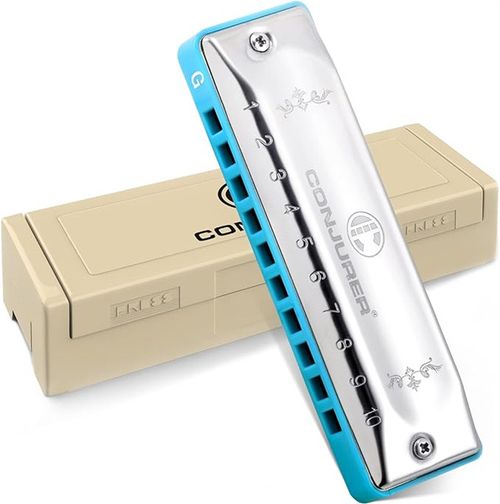
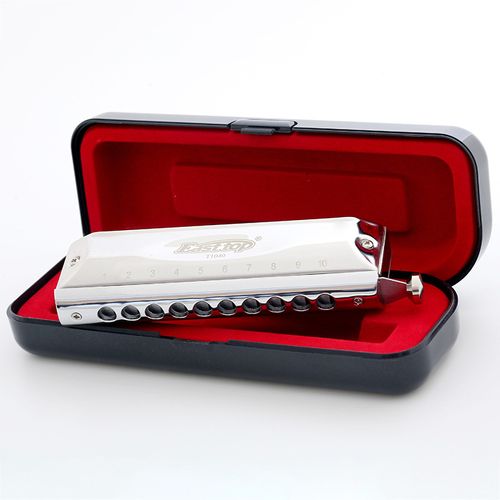
When it comes to the soulful "cry" of a harmonica, the Draw Vibrato and Tremolo are the most evocative techniques in a player's arsenal. However, a common technical crossroads often confuses players: Does the presence of valves change everything?
At NeonHarp, we believe understanding the physics of your instrument is the first step toward mastering it. Today, we dive deep into the world of unvalved versus valved harmonicas and how they redefine your expressive potential.
1. The Physics of Sound: What Happens Inside?
In an unvalved harmonica (like a standard 10-hole diatonic), both the blow and draw reeds in a single chamber interact. When you perform a draw vibrato, the air pressure fluctuates, affecting the pitch through a delicate balance of both reeds.
In a valved harmonica (common in Chromatics and "half-valved" diatonics), the valve (windsaver) seals the inactive reed. This means when you draw, only the draw reed vibrates.
2. Draw Vibrato: The Technical Split
Unvalved Dynamics: Without valves, you have more "leakage" by design, which allows for traditional bluesy bends. Draw vibrato here feels raw and involves more oral cavity manipulation.
Valved Precision: Valves create an airtight seal, resulting in a purer, more focused tone. Draw vibrato on a valved instrument is often more stable and easier to control at lower volumes, though it requires a more nuanced touch to avoid "choking" the reed.
3. Tremolo: Airflow vs. Reed Interference
While vibrato is a pitch fluctuation, Tremolo is a volume fluctuation.
Valved instruments respond faster to rapid diaphragm pulses because no air is wasted on the opposing reed.
Unvalved instruments offer a more "textured" tremolo, often blending the subtle overtones of the blow reed even during a draw note.
4. Which One Should You Choose?
Choose Unvalved if: You play Blues, Rock, or Folk and rely heavily on deep, dual-reed bending.
Choose Valved if: You play Jazz, Classical, or Pop and require maximum airtightness and melodic precision across all octaves.