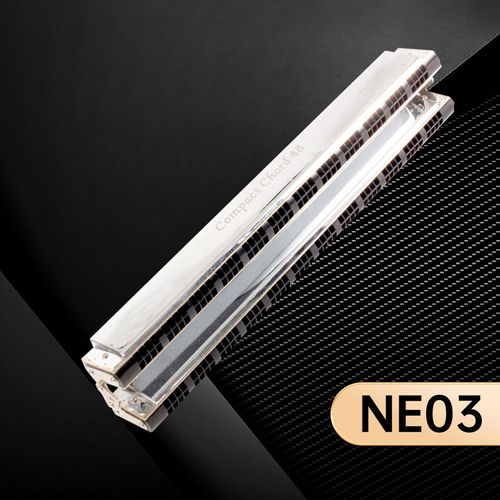
In the pantheon of musical instruments, few are as paradoxically humble and heroic as the Harmonica. Often dismissed as a "toy," its modern history is a saga of industrial precision meeting raw, human emotion.
The Industrial Soul
In the late 1800s, Hohner turned the harmonica into a global phenomenon. Mass-produced in Germany, it was originally intended for orderly European folk tunes. However, destiny had other plans. When these instruments reached the hands of musicians in the American South, the "Harp" began to sing a different song.
The Discovery of "Bending"
The most pivotal moment in harmonica history occurred when African American musicians discovered Bending. By manipulating air pressure, they forced the reeds to produce "blue notes"—the crying, sliding sounds that defined the Mississippi Blues. This wasn't just a technique; it was a subversion of Western musical design, turning a rigid tool into a soulful extension of the human voice.
From Trenches to the Stars
The harmonica’s portability made it a constant companion in the trenches of WWI and WWII. But its ultimate journey took place in 1965. Aboard the Gemini 6, astronaut Walter Schirra played a smuggled harmonica, making it the first instrument to ever sound in outer space.
Today: Precision and Passion
Today, the harmonica thrives in the digital age. From the soul-stirring chromatic solos of Stevie Wonder to the precision-engineered "Custom Harps" used by jazz virtuosos, the instrument continues to evolve. It remains the only instrument powered by the very essence of life: the human breath.