Why the Harmonica Became the Soul of American Blues
Among all instruments associated with American music, few are as emotional and recognizable as the harmonica.
With just a few notes, the harmonica can instantly evoke images of:
- lonely highways
- midnight trains
- smoky blues bars
- the Mississippi Delta
- vintage American streets
More than just a musical instrument, the harmonica became the emotional voice of American blues music.
Especially in Delta Blues and Chicago Blues, the harmonica shaped one of the most iconic sounds in American musical history.
The Roots of Blues Harmonica in the Mississippi Delta
The story begins in the Mississippi Delta during the early 20th century.
Blues music was born from the struggles of African American workers, railroad laborers, and farmers who used music to express pain, survival, and hope.
The harmonica quickly became popular for one simple reason:
It was affordable, portable, and easy to carry.
Unlike pianos or guitars, a harmonica could fit directly into a pocket.
People played blues harmonica beside railroads, cotton fields, bars, and street corners.
Its raw, crying, and expressive sound slowly became one of the defining voices of American blues music.
Railroad Culture and the Sound of the Blues Harp
One fascinating aspect of blues harmonica is how often it imitates trains.
Railroad culture played a huge role in early blues history.
Many musicians traveled between cities by train, bringing blues music across America.
Using:
- note bending
- breath control
- hand vibrato
harmonica players recreated the sound of steam engines and train whistles.
Even today, this classic blues harp sound reminds listeners of:
- the American South
- old railroads
- freedom
- loneliness
- road trip culture
How Chicago Blues Changed Harmonica History
During the 1940s and 1950s, many Southern musicians moved to Chicago.
Blues music evolved into a louder, more urban sound known as Chicago Blues.
This era completely transformed the harmonica.
Musicians began using microphones and amplifiers.
Suddenly, the harmonica became aggressive, distorted, and powerful.
This new amplified sound forever changed blues harmonica music.
The Legendary Little Walter
No artist influenced Chicago blues harmonica more than Little Walter.
He is widely considered one of the greatest harmonica players in music history.
Little Walter revolutionized the instrument by electrifying the harmonica.
Using:
- tube amplifiers
- microphone distortion
- aggressive bending techniques
he made the harmonica sound as powerful as an electric guitar.
Modern blues harmonica players still study and imitate his style today.
The Emotional Style of Sonny Boy Williamson II
While Little Walter focused on power and intensity, Sonny Boy Williamson II emphasized:
- storytelling
- rhythm
- emotional phrasing
His playing sounded almost like a human voice.
Many classic blues harp techniques were inspired by his expressive style.
His influence remains deeply rooted in:
- slow blues
- Southern blues
- traditional blues music
Why Blues Harmonica Feels So Emotional
Many listeners describe blues harmonica as sounding almost human.
That emotional quality comes from the direct connection between breath and sound.
Every movement of the player’s:
- breathing
- emotion
- dynamics
- phrasing
flows directly into the music.
Blues bending techniques create a crying, aching tone that closely resembles human emotion.
This is one reason the harmonica became the soul of blues music.
Why Americans Still Love Blues Harmonica Today
Even in modern music culture, blues harmonica remains highly respected.
Because it represents more than music.
It symbolizes:
- freedom
- Americana culture
- vintage lifestyle
- road trip spirit
- authentic American roots music
For many Americans, the harmonica remains one of the most soulful instruments ever created.
Best Harmonica for Beginner Blues Players
Most American blues musicians recommend starting with:
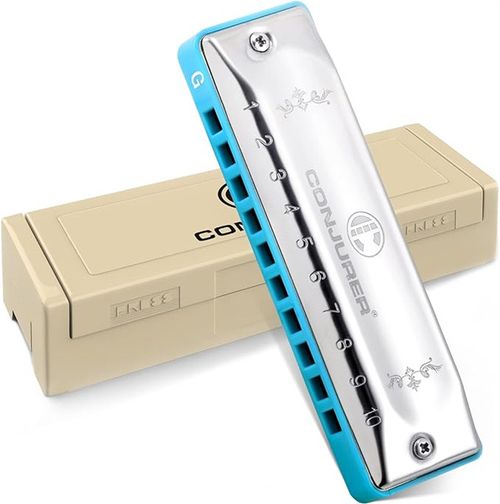
- a 10-hole diatonic harmonica
- key of C
- classic blues harp style
This setup is ideal for learning:
- note bending
- rhythm techniques
- Chicago blues phrasing
and remains the standard choice for beginners entering the world of blues harmonica.
Final Thoughts
From the Mississippi Delta to the streets of Chicago,
the harmonica has remained deeply connected to the history of American blues.
It is more than a pocket instrument.
It is a symbol of:
- freedom
- loneliness
- emotion
- American musical culture
And even today, when people hear the sound of blues harmonica,
they still imagine:
midnight trains, neon bars, dusty highways, and the true soul of American blues musi