For any harmonica enthusiast, Sound Quality and Durability are the most critical factors when selecting an instrument. What many fail to realize is that these two qualities are fundamentally determined by the individual components and the specific Harmonica Material used. From the core vibrating Harmonica Reeds to the structural support of the Harmonica Comb and the protective Harmonica Cover Plates, every material choice is crucial. This guide will reveal the secrets behind different Harmonica Material options to help you make the best purchase decision.
1. 🎵 The Soul of Sound: Harmonica Reeds Material Choices
Harmonica Reeds are the heart of the instrument, directly impacting the tone and responsiveness.
1.1 The Classic: Brass Reeds
Brass Reeds are the most traditional and common Harmonica Material on the market.
Tonal Characteristics: They produce a warm, rich, and often piercing tone, highly favored by blues and jazz players.
Durability and Lifespan: Being relatively soft, their lifespan is moderate. They are highly responsive to changes in breath pressure, contributing to that classic, soulful sound.
Keyword Optimization:Brass Reeds dominate the market with their signature sound.
1.2 Stainless Steel and Phosphor Bronze Reeds
Recently, Stainless Steel reeds have gained popularity due to their exceptional Durability. They offer stronger corrosion resistance and a longer playing life. Phosphor Bronze provides a good balance between the warmth of Brass Reeds and the sturdiness of stainless steel.
2. 🧱 Structure and Resonance: Harmonica Comb Material Comparison
The Harmonica Comb serves as the base that connects all parts, playing a critical role in air-tightness and resonance.
2.1 Traditional Charm: Wooden Comb
Traditional harmonicas often feature a Wooden Comb, typically made from pearwood or maple.
Tonal Characteristics: Many players believe wood imparts a warmer, "woody" sound, enhancing the overall resonance and feel.
Durability Challenges: Wood is susceptible to moisture absorption, which can cause swelling or shrinking, leading to cracks over time. This can negatively affect the Sound Quality and air-tightness. This is a key consideration for players in humid environments.
2.2 Modern Alternatives: Plastic (ABS) and Metal Combs
Modern harmonicas, particularly the Plastic Harmonica models using ABS resin, are increasingly popular due to their superior Durability and ease of maintenance.
Key Advantage: A Plastic Comb is completely waterproof and moisture-proof, offering stable air-tightness. It is the ideal Harmonica Material for those prioritizing maximum Durability and consistency.
Metal Combs (e.g., aluminum, acrylic) offer extreme air-tightness and a unique weight, but are typically higher in price.
3. ✨ Protection and Feel: Harmonica Cover Plates Material
The Harmonica Cover Plates protect the internal structure and also influence the instrument's resonance and feel in the hand.
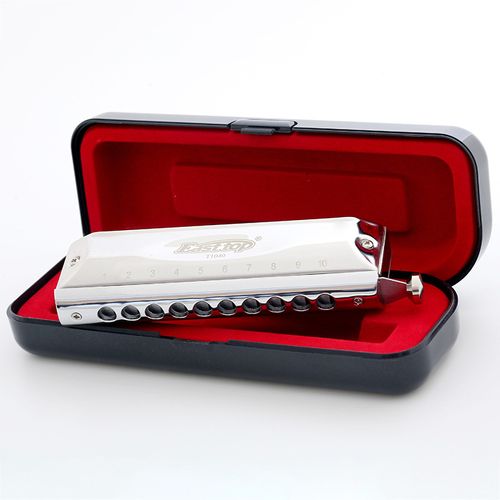
Stainless Steel Cover: This is the most common choice. Stainless Steel Cover plates offer excellent resistance to rust and a long-lasting shine, making it the best Harmonica Material for balancing aesthetics and Durability.
Brass Cover Plates: Provide a slightly stronger resonance but require more delicate maintenance to prevent tarnishing.
Plastic Cover Plates: Primarily used on entry-level Plastic Harmonica models to reduce cost, but the perceived Sound Quality may be less pronounced than with metal covers.
Conclusion and Buying Advice
When selecting your next harmonica, weigh the different Harmonica Material options based on your playing style and requirements.
For Classic Blues Tone: Opt for Brass Reeds + Wooden Comb (be mindful of maintenance).
For Maximum Durability and Low Maintenance: Choose Stainless Steel Cover + Plastic Harmonica Comb + Stainless Steel Reeds.
Final Takeaway: Whether you are a professional musician or a beginner, understanding the Harmonica Material is the key to unlocking your ideal Sound Quality and ensuring long-lasting performance.