Quick Answer: The iconic harmonica solo on Eurythmics’ 1985 hit "There Must Be an Angel (Playing with My Heart)" was performed by Stevie Wonder on a 12-hole (or 16-hole) C Chromatic Harmonica. Played primarily in the key of B minor / D major, the solo is widely celebrated as one of the greatest harmonica performances in pop music history.
When most people think of harmonicas in mainstream music, they picture gritty blues riffs or acoustic folk melodies. Yet, in 1985, British synth-pop duo Eurythmics released a track that shattered every expectation of what a harmonica could sound like in modern pop.
Anchored by Annie Lennox’s soaring vocals and Dave Stewart’s lush production, "There Must Be an Angel (Playing with My Heart)" reaches its emotional climax not with a guitar solo or a synthesizer breakdown, but with an extended, angelic chromatic harmonica solo played by the legendary Stevie Wonder.
The Story Behind the Studio Magic
During the mid-1980s, Eurythmics wanted to infuse their electronic pop sound with organic soul and gospel warmth. Dave Stewart reached out to Stevie Wonder, who was already renowned worldwide not only as a vocal and keyboard prodigy, but also as a virtuoso chromatic harmonica player.
When Wonder stepped into the studio, he didn’t rely on sheet music. Listening to the chord progression, he improvised a fluid, vocal-like melody that danced effortlessly over the rhythm section. His phrasing mirrored the human voice—complete with subtle vibrato, sweeping glissandos, and rapid chromatic runs that elevated the entire track into an instant UK #1 hit.
Musical Breakdown: Why This Solo Stands Out
For harmonica players looking to expand beyond standard 10-hole diatonic blues, studying this track offers a masterclass in musical expression:
The Power of the Chromatic Slide: Unlike a standard diatonic harmonica, a chromatic harmonica features a button-activated slide bar. This allows the player to access all 12 notes of the Western chromatic scale, making complex key changes and jazz-inflected passing tones effortless.
Vocal-Style Phrasing: Stevie Wonder treats the harmonica like a singing voice. Notice how he eases into sustained notes with a gentle swell rather than attacking every note sharply.
Rhythmic Syncopation: Rather than playing strictly on the beat, Wonder weaves behind and ahead of the groove, giving the solo an airy, weightless quality that matches the song's title.
Essential Gear: What You Need to Play It
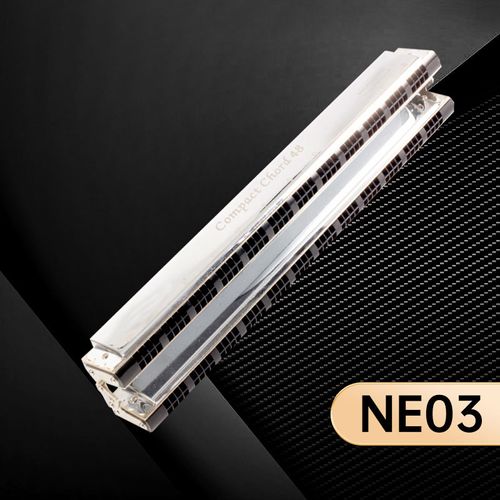
To capture the rich, warm timbre of this recording, a standard blues harp won't suffice. You will need a C Chromatic Harmonica equipped with wind-saving valves (windsavers) to ensure maximum airtightness and dynamic response.
When selecting an instrument for expressive pop and jazz solos, pay close attention to slide action smoothness and comb material. A precision-engineered chromatic harmonica—such as the neonharp Chromatic Series—provides the rapid slide response and warm tonal resonance needed to execute fast chromatic runs without air leakage or mechanical clicking.
Frequently Asked Questions (FAQ)
Who played the harmonica on "There Must Be an Angel"? Motown legend Stevie Wonder performed the harmonica solo on Eurythmics' 1985 hit single.
What key harmonica is used in "There Must Be an Angel"? Stevie Wonder used a Key of C Chromatic Harmonica. Because the chromatic harmonica contains all sharp and flat notes via its side button, a single C instrument can play smoothly in the song's key of B minor / D major.
Is this song suitable for harmonica beginners? While beginners can learn the main vocal melody on a C chromatic harmonica, Stevie Wonder's improvised solo requires intermediate-to-advanced control over breath dynamics, tongue blocking, and rapid slide coordination.