The Neon Sound - Mini Harmonica Advanced Techniques Guide
🎼 H1: Mini Harmonica Advanced Techniques Guide
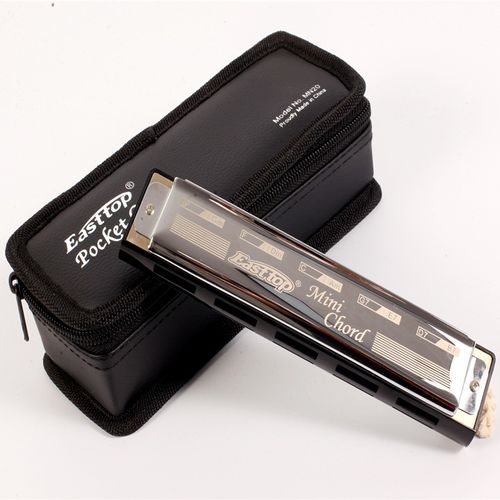
For many, the Mini Harmonica is merely a charming accessory—perhaps a stylish mini harmonica keychain. Yet, for true musicians and advanced players, it is a “secret weapon” for achieving high-level performance. Presented by Neonharp, this guide is your entry point into the professional world of the micro harmonica.
✅ H2: Why the Mini Harmonica is "Hard, Yet Powerful" (Pre-Advanced Mindset Shift)
Before diving into techniques, we must acknowledge the unique nature of this instrument. Iconic brands, such as the hohner mini harmonica, offer designs that necessitate a "high-difficulty, high-reward" approach.
1️⃣ Mini Harmonica Characteristics
Small Form Factor: Extreme portability for music anytime, anywhere.
Short Air Channels: This is the core difference. It means rapid air response and quick reed engagement.
High Difficulty Control: The extreme sensitivity from the short air path demands near-perfect breath control from the player.
2️⃣ Why Advanced Players Prefer Mini Harmonicas
Focused Expression: Its sensitivity instantly captures tiny variations, making techniques like vibrato and chops sharper and more intense.
Ideal for Improvisation, Street, Recording: Its size and distinct timbre make it perfect for spontaneous jams, busking, and Lo-fi/Chill recording sessions.
"Tight" and "Sharp" Tone: Compared to a standard harmonica, the sound is more granular and has greater cutting power.
For many advanced musicians, the Mini Harmonica is a true "Technique Amplifier," magnifying both your skills and every subtle mistake.
✅ H2: Advanced Technique I: Advanced Breath Control
This is the most critical and challenging fundamental for the mini harmonica. Stable and precise airflow is the difference between an amateur and a professional sound.
| Teaching Method | Description |
| Micro Air Control | Use the minimal, steadiest airflow—like trying to extinguish a candle without moving the flame—to engage the reed. Focus on tiny diaphragm and throat movements. |
| Weak Blow/Draw Stability | Practice maintaining a stable pitch at extremely low volumes. If the sound "explodes" upon blowing, your airflow is too coarse. |
| Dynamics (Loudness Contrast) | The correct way is like "drawing a line with your mouth"—smoothly transition from $p$ (soft) to $f$ (loud) and back, avoiding sudden bursts. |
✅ H2: Advanced Technique II: Fast Single-Note Accuracy
The smaller hole spacing means the reeds are incredibly close, demanding "blind spot targeting" accuracy from the player.
Key Focus Points:
Tongue Micro-Adjustment: While your lips cover multiple holes (lip purse), use subtle changes in your tongue position (forward/back, up/down) to direct and focus the airflow to the target hole.
Lip Purse vs. Light Tongue Block: Use a broader "Lip Purse" for coverage, and combine it with the tongue lightly touching the side holes as a reference point for fast transitions.
Fast Skip-Hole Practice: Practice non-adjacent hole movements, e.g., Blow 1 - Draw 3 - Blow 5 - Draw 3 - Blow 1, to build muscle memory and response time in the tongue tip.
✅ H2: Advanced Technique III: Bending on Mini Harmonica
Bending is the soul of the harmonica and the technique that truly separates advanced mini harmonica players.
Why Bending is Harder on Mini Harmonica:
Short Air Channel: The fast airflow leaves minimal time for the player to adjust the oral cavity.
Low Forgiveness: The reeds are hyper-sensitive to changes, and "forcing" the note will easily result in pitch loss.
Three Core Control Points:
Oral Cavity Space: Change the shape of the back of your mouth, imagining the sound transitions from "Ooo" to "Eee."
Tongue Root Position: Lift the root of your tongue toward the back/up, slightly constricting the throat space.
Airflow Angle: Feel the air current is no longer blowing straight but is instead directed downward into the instrument.
Common Mistake: Forcing the note with power. Correct bending is an airflow adjustment, not a strength contest.
✅ H2: Advanced Technique IV: Ornamentation and Expression (Vibrato, Trills, Effects)
This is the dividing line where a Mini Harmonica performance moves from "pleasant" to "professional."
Vibrato:
Throat Vibrato: Use rapid, controlled pulsations from the throat or diaphragm to create a continuous pitch/volume ripple.
Hand Vibrato: Rapidly and rhythmically open and close your hands around the harmonica to create a warm, "wah-wah" effect using the resonance chamber.
Trill (Fast Reiteration): Rapid, continuous switching between two adjacent holes or notes to create a brilliant, ornamental effect.
Tongue Slap / Pull: Use the tongue to momentarily block the hole and quickly release it, generating a percussive, rhythmic "slap" or "pull" sound.
These techniques transform the Mini Harmonica from a cute mini harmonica keychain into a true performance instrument.
✅ H2: Advanced Technique V: Improvisation and Music Style Suitability
Moving your playing from technical mastery to musical artistry.
Suitable Styles for Mini Harmonica:
Blues, Folk, Pop Solo, Lo-fi / Chill, Acoustic Ballads. Its "tight" and "sharp" timbre makes it particularly effective as a "final flourish" in a track.
Three Elements of Improvisation:
Scale Familiarity: Know the Blues scale and arpeggios of the target chords so you know which "safe notes" you can hit at any time.
Rhythm: Improvisation is not random; it is creation within a stable rhythmic framework.
Motif Repetition: Find a short, pleasing phrase (motif) and vary, repeat, or develop it to maintain musical coherence in your solo.
✅ H2: How Advanced Players Should Choose a Mini Harmonica (Neonharp Recommendation)
Choosing a quality instrument is essential to unlocking your advanced techniques.
Airtightness: A highly airtight harmonica is required for the Micro Air Control and precise bending discussed.
Reed Sensitivity: High-sensitivity reeds react quickly to subtle air changes, which is key for successful bending.
Material Stability: Stable cover plates and comb ensure that rapid Hand Vibrato and other techniques do not affect the playability.
For advanced players, a high-response mini harmonica like the Neonharp model determines your technical ceiling. Don't let a low-quality instrument bottleneck your progress.
✅ H2: The 10-Minute Daily Advanced Training Plan (Hyper Practical)
This is our specialized, Mini Harmonica-optimized advanced practice loop.
| Training Day | Core Focus | Goal |
| Day 1 | Breath Control | 5 minutes of continuous weak-volume playing, maintaining stable pitch with no "exploding" notes. |
| Day 2 | Single-Note Skip | Practice the 1-3-5-3-1 sequence quickly, aiming for 100% accuracy. |
| Day 3 | Bending | Sustain a half-step bend on 3 different holes for 3 seconds each without losing control. |
| Day 4 | Ornamentation | Incorporate fast Throat Vibrato or a Tongue Slap into a simple melody. |
| Day 5 | Improvisation | Select a backing track and improvise for 3 minutes over its chord progression. |
| Day 6-7 | Free Play + Review | Free practice and record yourself, identifying and focusing on your biggest weakness. |
✅ H2: Final Thoughts (Brand + Musical Aspiration)
The Mini Harmonica is small, but it is not a toy; it is a serious musical instrument.
From the endearing mini harmonica keychain to the professional performance instrument, we at Neonharp are dedicated to providing the best playing experience for every musician. When you master these advanced techniques, the sound of your mini harmonica can be more direct and free than almost any other instrument.
Visit the Neonharp website today to upgrade your gear and let your Mini Harmonica unleash its brightest Neon Sound!