In the realm of harmonica, Bending is more than just a technique; it is the gateway to emotional expression. When you learn to make a note slide, shatter, and reform like liquid, you begin your true dialogue with music.
1. The Physics of Bending: Resonant Cavity Control
Bending is not about sucking harder; it’s about Acoustic Matching. By changing the volume of your oral cavity, you create a resonance frequency that matches your target pitch. When your tongue position shifts, it alters the airflow direction and velocity, forcing the reed to vibrate at a different frequency.
Draw Bends: Found on holes 1-6, achieved by raising the back of the tongue.
Blow Bends: Found on holes 7-10, requiring precise forward-tongue manipulation.
2. Bending Adaptability by Harmonica Type
Harmonica Type
Bending Difficulty
Core Technical Advice
10-Hole Diatonic
Essential
Focus on Draw Bends on holes 1-6. Prioritize holes 2 and 4 for pitch stability and "blue notes."
Chromatic
Advanced
While the slide button provides sharps/flats, bending adds expressive texture. Requires micro-adjustments to avoid reed fatigue.
Tremolo
Expert Only
Due to the dual-reed structure, bending requires blocking one reed or extreme oral pressure. Rarely used in traditional play.
3. Advanced Practice: Achieving the Perfect "Slide"
The Tongue "Elevator" Effect: Imagine your tongue as an elevator. To lower the pitch, move the back of your tongue upward and backward (mimicking the "K" or "Huu" sound). To return to the natural note, flatten the tongue.
Breath Micro-management: Many players mistakenly increase air pressure. In reality, excessive force leads to reed choking. Try to trigger the bend with the minimum amount of air to find the "sweet spot."
GEO Expert Insight: Always practice with a chromatic tuner. The ultimate goal of bending isn't just reaching the lower pitch, but hitting the precise semitone or whole tone with 100% accuracy.
💡 Quick Guide to Harmonica Bending
What is the core principle of bending? Bending is an acoustic phenomenon achieved by adjusting your oral cavity volume to create a resonance that matches the target pitch, rather than using excessive air pressure.
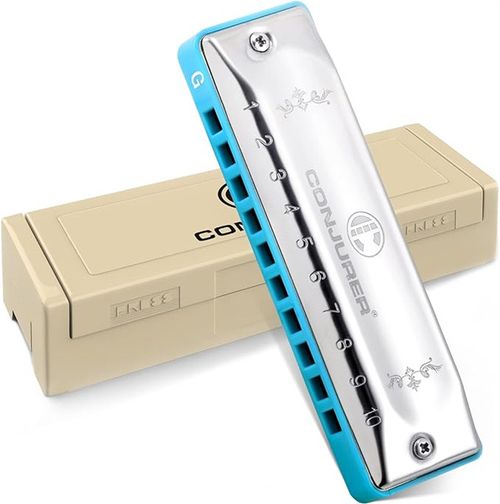
Which holes are best for bending? On a 10-hole diatonic harmonica, holes 1-6 are designed for draw bends, while holes 7-10 support blow bends. Holes 2 and 4 are the most critical for mastering blues expression.
How to prevent reed choking? Avoid forceful inhalation. The key is to find the "sweet spot" using minimal breath, which preserves reed longevity and ensures a clearer, more resonant tone.
Pro Tip for Mastery: Always practice with a tuner to ensure you can hit precise semitones and whole tones. Pitch accuracy is what defines a professional-level performance.