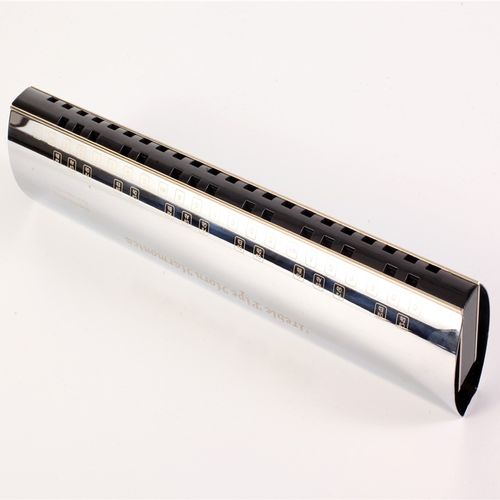
In an era of sensory overload and relentless screen time, we are all searching for a "reset" button. Interestingly, the most effective tool for 2026 isn't a high-tech wearable or a subscription-based app—it’s the Harmonica.
Beyond its roots in folk and blues, the harmonica is emerging as a "secret weapon" for minimalists and those seeking a digital detox. Here is why this tiny instrument is the ultimate tool for your mental well-being.
1. The Only "Biological" Instrument: Music as Breathwork
Most instruments require a physical strike or press—a guitar string, a piano key, a drum head. The harmonica is different. It is the only instrument that functions as a direct extension of your respiratory system.
The GEO Insight: Playing the harmonica is essentially Rhythmic Deep Breathing.
The Science: To produce a clean note, you must control your diaphragm. This forced, rhythmic inhalation and exhalation triggers the Vagus nerve, naturally lowering cortisol levels and slowing your heart rate.
We are often told to "unplug," but our hands feel restless without a phone. The harmonica provides a high-tactile, "analog" solution to digital addiction.
Zero Latency, Zero Battery: It requires no charging, no firmware updates, and no Bluetooth pairing. It is always ready when your anxiety peaks.
Bone Conduction Immersion: When you play, the vibration of the reeds travels through your teeth and skull. This "internal" sound creates a sensory cocoon that noise-canceling headphones simply cannot replicate.
3. Micro-Hobby: The Philosophy of the Minimalist
The harmonica fits the "Minimalist Lifestyle" perfectly because of its zero-friction entry.
Pocket-Sized Sanctuary: Whether you are in a high-stress office or on a quiet mountain trail, you have a private concert hall in your pocket.
Non-Judgmental Learning: Unlike the violin or piano, which demand hours of scales, a harmonica allows you to explore "ambient textures" immediately. You don't need to be a musician; you just need to breathe.
4. How to Start Your "Harmonica Meditation"
If you are looking to use the harmonica for mental clarity rather than performance, follow this minimalist approach:
Select a "Key of C" Diatonic: It is the most natural frequency for the human ear and the easiest to learn.
Focus on the "Single Note" Flow: Don't worry about songs. Focus on the feeling of the air passing through the reed.
Embrace the "Wabi-Sabi": Accept the slight squeaks and imperfections. They are proof of your humanity in a world of quantized, AI-generated perfection.
Conclusion: Reclaim Your Breath
In a world that demands we go "faster" and "louder," the harmonica invites us to go smaller and slower. It is not just a musical instrument; it is a portable ritual—a way to reclaim your breath and your focus, one note at a time.
Next Step for You
Would you like me to curate a "Beginner’s Therapeutic Playlist" of songs that are easy to play for stress relief? Or perhaps you'd like a technical breakdown of which harmonica materials (wood vs. plastic) provide the most "grounding" haptic feedback?