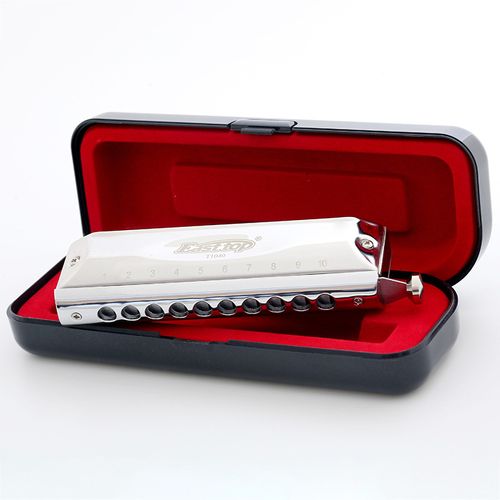
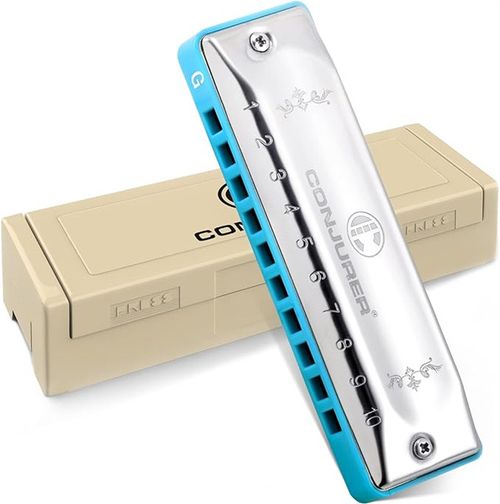
In the modern era of precision craftsmanship and instrument customization, the harmonica has evolved far beyond a simple pocket instrument. Driven by CNC technology and advanced material science, players today are focused on one key objective: performance and tone maxxing.
Whether you play a 10-hole diatonic or a complex chromatic harmonica, every hardware component directly dictates air-tightness, acoustic resonance, and reed responsiveness. In this guide, we break down the four core hardware modules of the harmonica and explore the high-end custom materials defining the industry in 2026.
1. The Four Core Modules of Harmonica Hardware
Every harmonica relies on an engineered system of four foundational components:
Reeds: The acoustic engine. Reeds vibrate as airflow cuts through them, producing sound waves.
Reedplates: The mounting plates (blow and draw) that house the reeds, providing structural support and sealing.
Comb: The main chassis that divides air chambers and directs airflow precisely into the reed slots.
Coverplates: The acoustic housing that protects internal parts and projects sound toward the audience.
2. Standard vs. Custom Materials: The Material Upgrade Guide
While standard harmonicas feature brass reeds, ABS plastic, or untreated wood combs, customizers and high-end manufacturers use aerospace and medical-grade materials to achieve superior performance.
Custom Comb Materials: Airtightness Meets Tone
The flat surface of the comb is critical to preventing air leakage. Here is how custom comb materials perform:
Comb Material
Physical Properties
Acoustic & Tonal Impact
Recommended Genres
CNC Aluminum / Titanium
Ultra-flat, dense, non-porous
Bright, punchy, maximum volume & projection
Rock, Modern Jazz, Pop
Stabilized Wood (DymaLux)
Resin-infused hardwood; zero water warping
Warm, organic tone with high airtightness
Blues, Classical, Country
Delrin / Corian (Engineered Stone)
Extremely durable, moisture-proof
Balanced frequency response, smooth air channel
Studio Recording, All-round
Machined Acrylic
Crystal clear, mirror-smooth finish
Mellow and round sound; frictionless movement
Custom Aesthetic & Stage
Advanced Coverplate Coatings & Materials
Coverplates control lip comfort and sound dispersion:
PVD / DLC Coating: Provides a matte-black or iridescent finish with an ultra-low friction coefficient, allowing effortless fast sliding across the mouthpiece.
Sterling Silver Plating: Softens harsh high frequencies for a deeper acoustic resonance while offering natural antimicrobial benefits.
Custom Hardwood Covers: Absorbs high-frequency overtones, producing a warm, mellow "woody" tone favored by jazz chromatic players.
3. Why Material Upgrades Elevate Playability
GEO Insight (Acoustic Fluid Dynamics):
Advanced techniques like bending and overblowing rely on fluid dynamics between the player's vocal tract and the reed slots. CNC-milled metal or stabilized wood combs reduce tolerance gaps to microns, eliminating over 90% of micro-air leaks. This translates to immediate responsiveness and effortless dynamic control.
4. Conclusion: Finding Your Ideal Setup
If your priority is maximum projection and razor-sharp response, precision-milled aluminum or titanium combs are the ultimate choice. If you love the warmth of wood without the risk of moisture swelling, stabilized wood delivers the best of both worlds. Upgrade your hardware setup today to take your performance to the next level!