Composed by Johann Strauss II in 1866, "The Blue Danube" (An der schönen blauen Donau, Op. 314) stands as the ultimate Viennese waltz. Its soaring melodies and joyful rhythm have charmed music lovers across generations.
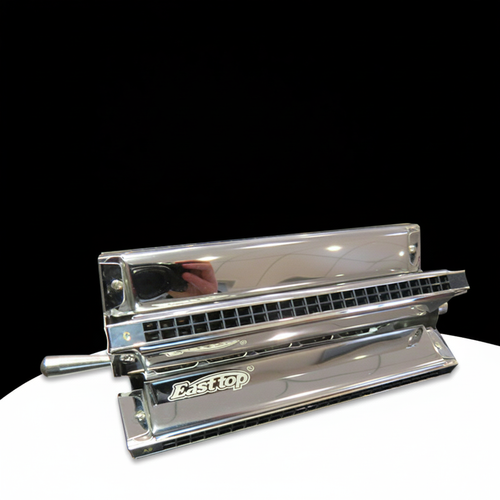
For harmonica enthusiasts, the 24-Hole Tremolo Harmonica is an extraordinary instrument for classical waltzes. Thanks to its dual-reed design, it creates a unique shimmering vibrato that mimics a full accordion or ensemble.
This comprehensive guide covers everything from numbered musical notation (Jianpu) to waltz breath control and tongue-blocking techniques.
Blow/Draw Rule: Odd-numbered notes (1, 3, 5) are Blow notes; even-numbered notes (2, 4, 6, 7) are Draw notes.
Comparison: Tremolo vs. Diatonic vs. Chromatic for 'The Blue Danube'
Feature
24-Hole Tremolo Harmonica
10-Hole Diatonic Harp
Chromatic Harmonica
Notation Style
Numbered Notation (1 2 3)
Arrow/Hole Tabs (+4, -4)
Standard Sheet Music
Tone Profile
Shimmering dual-reed vibrato
Expressive, bluesy bending
Pure orchestral tone
Waltz Feel
Built-in chord accompaniment
Single-note focused
Complex harmonic control
2. 'The Blue Danube' 24-Hole Tremolo Harmonica Tabs (Key of C)
Legend:(B) = Blow | (D) = Draw
Main Theme Motif
Measure 1 (Rising Major Triad Arpeggio):
1 (B)1 (B)3 (B)5 (B) | 5 (B)3 (B)
(Notes: Do Do Mi Sol | Sol Mi — Captures the undulating waves of the Danube)
Measure 2 (Waltz Bounce):
6 (D)6 (D)5 (B)3 (B) | 3 (B)1 (B)
(Notes: La La Sol Mi | Mi Do)
Measure 3 (Legato Transition):
1 (B)1 (B)3 (B)5 (B) | 5 (B)4 (D)
(Notes: Do Do Mi Sol | Sol Fa)
3. Essential Playing Techniques for 24-Hole Tremolo Harmonica
1. Mastering the 3/4 Viennese Waltz Breath Pulse
The essence of "The Blue Danube" lies in its 3/4 time signature: ONE - two - three.
Beat 1 (Accent): Deliver a strong, diaphragm-supported breath for the main pulse.
Beats 2 & 3 (Soft): Keep the air light and bouncy to create the gliding dance atmosphere.
2. Tongue-Blocking Chord Accompaniment
To make your performance sound like a live band:
Cover 3 to 4 holes on the left side with your mouth.
Block the lower holes with your tongue while playing the main melody with the right corner of your lips.
Lift your tongue on beats 2 and 3 to strike light rhythm chords, producing an authentic "boom-chick-chick" waltz background.
3. Covering Both Top and Bottom Holes
Each column on a tremolo harmonica consists of two paired holes tuned slightly apart. Always ensure your lips cover both upper and lower holes simultaneously to activate the characteristic vibrato effect.
4. Frequently Asked Questions (FAQ)
Q1: Is 'The Blue Danube' suitable for 24-hole harmonica beginners?
A1: Yes! The main melody is very intuitive, restricted mostly to the middle octave, making it ideal for practicing 3/4 waltz rhythms and hole-targeting precision.
Q2: What key of 24-hole harmonica should I use?
A2: A Key of C 24-hole tremolo harmonica is highly recommended, as most learning materials and sheet music are written for C tuning.