How to Play “Have You Ever Seen the Rain?” on Harmonica: A Complete 10-Hole Harmonica Guide
A classic harmonica performance does not require blistering speed or overly complex virtuosity. Often, a clear, powerful melody paired with raw emotional resonance showcases the instrument’s true soul. Creedence Clearwater Revival’s iconic classic, “Have You Ever Seen the Rain?”, is a masterclass in melodic simplicity.
Infused with timeless American rock, country rock, folk, and Americana roots, this song features a distinct melodic contour and rock-solid rhythm. For 10-hole diatonic harmonica players—especially those using a NeonHarp—it serves as the ultimate bridge from beginner basics to intermediate musical expression.
Why "Have You Ever Seen the Rain?" is Perfect for 10-Hole Harmonica
Learning this song is far more than a routine exercise in memorizing tabs; it is a holistic training module for core harmonica mechanics. Through this single piece, you systematically develop:
Clean Single Notes (Puckering and isolating air holes)
Breath Control (Seamless blow-and-draw transitions)
Rhythm & Note Duration (Groove stability and phrasing)
Tone & Dynamics (Volume control and acoustic warm tones)
Expressive Techniques (Subtle bending, vibrato, and vocalized phrasing)
Whether you are looking for easy harmonica songs or searching for practical diatonic harmonica songs to refine your tone, this classic rock staple delivers maximum musicality with accessible mechanics.
Selecting the Right Harmonica
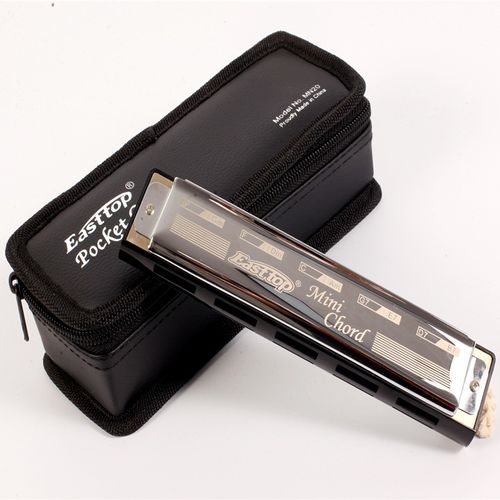
To capture the authentic Americana and folk-rock character of the track, use a 10-hole diatonic harmonica (standard C major diatonic is recommended for beginners).
The 10-hole diatonic is the bedrock instrument of blues harmonica, rock, country, and folk. While beginner players use its simple layout to build precision single notes, advanced players utilize its acoustic chamber for draw bends, tongue blocking, overblows, and dynamic variation. If you play a NeonHarp 10-hole diatonic, its air-tight construction and reed responsiveness make executing clean notes and expressive bends significantly easier.
Step 1: Mastering Clean Single Notes First
The biggest mistake beginners make is rushing into bending, rapid vibrato, or overblows before mastering fundamental single notes. Adding advanced embellishments over an unstable foundation yields harsh, unrefined sound.
What Is a Clean Single Note?
A clean single note occurs when airflow passes strictly through one designated hole without leaking into adjacent chambers.
  [ Improper Air Leakage ]       [ Clean Single Note ]
   Hole 3   Hole 4   Hole 5       Hole 3   Hole 4   Hole 5
  (  Blow  |  BLOW  |  Blow )    (  ---   |  BLOW  |  ---  )
        [Unwanted Noise]              [Pure Tone]
How to Achieve It with the Puckering Embouchure
Form the shape: Purse your lips gently as if whistling or sipping through a wide straw.
Position the harp: Place the harmonica deep inside your mouth so your lips seal over the cover plates, target-locking a single hole.
Control air pressure: Use relaxed, gentle airflow. Never force air into the instrument to achieve volume—loudness comes from chamber resonance, not lung force. If you hear adjacent noise, adjust your mouth shape and harmonica angle instead of blowing harder.
Step 2: Developing Breath Control and Airflow Continuity
Unlike wind instruments that only consume air upon exhaling, the harmonica requires active management of both blowing (exhaling) and drawing (inhaling). Without proper breath control, players suffer from premature fatigue, interrupted phrases, erratic volume spikes, and broken rhythms.
Daily Breath Control Drill
Phase 1: Isolated Tone  -->  Blow (Hold 4s)  -->  Pause  -->  Draw (Hold 4s)  -->  Pause
Phase 2: Fluid Flow     -->  Blow (4s)  -->  Draw (4s)  -->  Blow (4s)  -->  Draw (4s)
Phase 3: Rhythmic Sync  -->  Apply seamlessly within a metronome-driven measure
Focus on maintaining equal air pressure across both blow and draw directions. Your breath should feel as natural as breathing while sleeping.
Step 3: Phrasing, Note Duration, and "Singing" Through the Reed
A common beginner pitfall is treating a song as an isolated sequence of tab numbers (+4 -4 +5 -5). Music occurs in the spaces and durations between those numbers.
Understanding Note Duration
Holding a note for its full length gives Americana and folk melodies their warm, spacious character. Truncating notes too early strips the song of its emotional weight.
Play Like You Sing
Before playing a phrase on your harmonica, hum the vocal line of "Have You Ever Seen the Rain?". Notice where singer John Fogerty takes breaths, where he accents key syllables, and where he holds notes. Mirroring these vocal dynamics on your instrument elevates your performance from mechanically reading tabs to genuine musical storytelling.
Step 4: Rhythm and Metronome Practice
Correct notes played at the wrong time break the groove. Train your internal clock using a metronome across three distinct speed phases:
| Practice Phase | Tempo Target | Focus Area |
| 1. Slow Speed | 50–60 BPM | Hole accuracy, clean blow-draw switches, breath timing |
| 2. Medium Speed | 70–80 BPM | Rhythmic stability, smooth phrasing, natural accents |
| 3. Full Tempo | Original Song Tempo (~116 BPM) | Full groove integration, dynamic expression, musical feel |
Step 5: Incorporating Expressive Bending, Dynamics, and Vibrato
Once your core melody is pitch-perfect and locked to the rhythm, begin layering expressive techniques.
Expressive Bending vs. Technique Showcase
Bending on a diatonic harmonica alters the pitch by reshaping your oral cavity, tongue position, and airflow angle. In "Have You Ever Seen the Rain?", bending should be applied sparingly as an expressive vocal slur rather than a chaotic blues technique. Use subtle micro-bends on draw notes to mimic vocal inflection.
Dynamics (Volume Control)
Avoid playing at a single, static volume level. Incorporate natural volume arches:
Soft (Piano): Gentle airflow for reflective verses.
Crescendo: Increasing pressure into the chorus.
Decrescendo: Tapering off air gently at the end of musical phrases.
Controlled Vibrato
Apply a gentle throat or diaphragm vibrato exclusively to sustained holding notes. Avoid fast, erratic hand-cupping movements, which distort the acoustic clarity of folk rock.
The 4-Stage Practice Framework
To maximize efficiency, follow this structured roadmap when learning any 10-hole harmonica song:
+-------------------------------------------------------------------+
| STAGE 1: MELODY     -> Master accurate single notes & tab sequence |
| STAGE 2: RHYTHM     -> Lock phrase timing using a metronome       |
| STAGE 3: TONE       -> Optimize embouchure, warmth, & resonance    |
| STAGE 4: EXPRESSION -> Layer bends, dynamics, & tasteful vibrato  |
+-------------------------------------------------------------------+
Top 5 Beginner Harmonica Pitfalls to Avoid
Blowing Too Hard: Over-blowing chokes the reeds, sharpens tone pitch, and damages instrument longevity.
Rushing into Bending: Attempting draw bends before mastering clean single notes creates bad embouchure habits.
Ignoring the Metronome: Playing with erratic timing ruins the musical groove.
Neglecting Breath Strategy: Running out of air mid-phrase due to unplanned blow/draw sequences.
Focusing on Notes Over Musicality: Playing tabs accurately without adding feeling, dynamics, or vocal phrasing.
Beginner to Intermediate Progression Roadmap
BEGINNER LEVEL
   └── Clean Single Notes (Puckering)
   └── Basic Breath Control & Air Management
   └── Fundamental Tab & Melody Accuracy
          │
          ▼
INTERMEDIATE LEVEL
   └── Metronome-Locked Rhythm & Timing
   └── Acoustic Tone Warmth Optimization
   └── Target Draw Bends for Emotional Vocal Slurs
   └── Diaphragm Vibrato & Dynamic Control
          │
          ▼
MUSICAL EXPRESSION
   └── Personalized Phrasing, Americana Style, & Storytelling
Conclusion: Making Your Harmonica Sing
Mastering "Have You Ever Seen the Rain?" on a 10-hole diatonic harmonica is not about how many rapid notes you can execute—it is about making a simple melody sing with soul, clarity, and precision. By applying structured breath control, clean single notes, metronome timing, and subtle dynamic shading, you transform a basic exercise into an authentic piece of music. Pick up your NeonHarp, follow the four-stage framework, and start playing today!