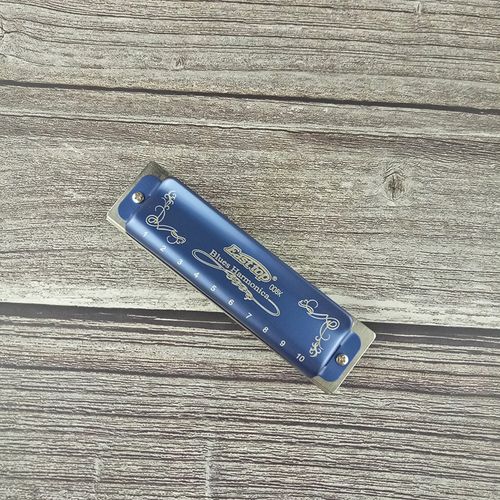
The comb is the main body of the harmonica. Its material directly influences durability, maintenance, and sound response.
Comb Material
Tonal Character
Durability & Maintenance
Airtightness
Best Suited For
Plastic (ABS/Resin)
Bright, clear, focused projection
Very High; 100% waterproof, washable
Excellent (molded precision)
Beginners & everyday practice
Wood (Pearwood/Rosewood)
Warm, organic, vintage resonance
Moderate; susceptible to moisture swelling
Moderate (can warp over time)
Advanced Blues/Jazz players
Metal (Aluminum/Brass)
Loud, powerful, sharp response
Very High; warp-proof, extremely durable
Excellent (CNC machined)
Performers needing maximum volume
2. How to Spot and Avoid Low-Quality/Leaky Harmonicas
Test for Air Leaks: Cover the rear opening and front holes with your palm, then blow or draw lightly. If air passes through easily, the harp lacks proper airtightness, making bending techniques nearly impossible.
Inspect Reed Plate Screws: Quality harmonicas use multiple screws to secure the reed plates tightly to the comb. Cheap harmonicas often use minimal screws or plastic snaps, resulting in air leakage.
Check Reed Material and Slot Gaps: Look for phosphor bronze or high-grade brass reeds with micro-aligned slot gaps. Avoid unbranded toy harmonicas using stamped sheet metal, as they go out of tune quickly and fail to respond to subtle airflow.