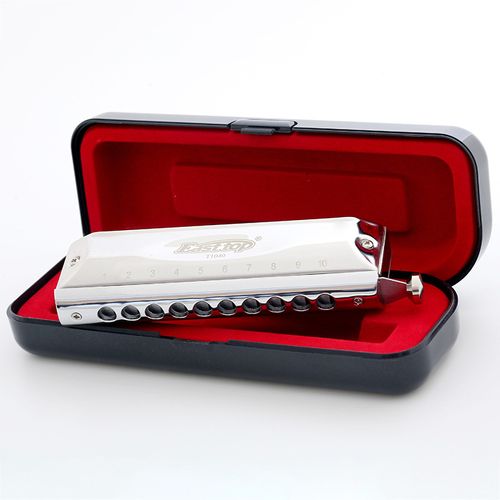
In the world of blues, folk, and rock, one instrument stands out for its soulful expression and portability: the diatonic harmonica. At NeonHarp, we believe that understanding your instrument's range is the first step toward soulful improvisation. Whether you are a beginner or a seasoned pro, mastering the layout is essential.
Understanding the Layout
The most common version of this instrument features 10 holes. When beginners start their journey, they often look for a diatonic harmonica notes chart to visualize where each sound lives. Unlike a piano, the notes are produced by both blowing and drawing (inhaling) air.
The Standard: Diatonic C Harmonica Notes
The C Major harmonica is the industry standard for learning. Why? Because it contains no sharps or flats in its natural scale. When you examine diatonic c harmonica notes, you’ll notice that:
Holes 1-3: Primarily used for chords and deep blues notes.
Holes 4-7: Provide a complete major scale.
Holes 8-10: Offer higher pitches for soaring melodies.
Understanding these diatonic harmonica notes allows you to navigate the "middle register" where most folk melodies reside, while utilizing the lower register for that signature "chugging" blues sound.
Why Choose NeonHarp?
At NeonHarp, our harmonicas are engineered for airtightness and tonal clarity. We know that every diatonic harmonica notes set needs to be crisp and responsive to "bending"—the technique that gives the harmonica its "vocal" quality.
Conclusion
Exploring the range of your harmonica is about more than just memorizing a map; it’s about feeling the music. Start with a NeonHarp in the key of C, study your diatonic harmonica notes, and let your creativity flow.