The Intro Every Man Must Master: Billy Joel's "Piano Man" Harmonica Guide
If there is one melody that can make half the people in a bar raise their glasses and the other half start humming along after just three notes, it is definitely Billy Joel's "Piano Man."
Many harmonica beginners, after mastering basic scales, look for a song that is both melodic and has "attitude." Although the song is titled "Piano Man," its soul comes from the Key of C Diatonic Harmonica hanging around Billy Joel's neck. This song doesn't require advanced bending techniques, but it demands excellent breath control and rhythm.
Today, we are going to break down this essential "tough guy" classic.
1. Preparation: What Harmonica Do You Need?
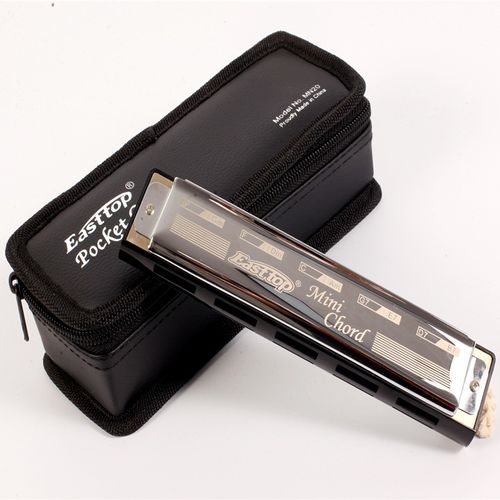
Key Point: The original song uses a standard 10-hole Diatonic Harmonica in the Key of C.
This is great news because 90% of beginners start with a C harmonica (like a Hohner Special 20 or Marine Band). So, you don't need to buy a new instrument; you can start with the one you already have.
2. Core Technique: The Folk-Rock "Grit"
Unlike clean, single-note melodies found in anime songs or classical pieces, Billy Joel plays in a Chord-Melody style.
- Don't just play single notes: When playing the main melody, allow your mouth to cover multiple holes (e.g., when blowing into hole 4, let some air hit holes 3 and 5). This creates a fuller sound.
- Rhythm is the Soul: This is a 3/4 Waltz rhythm. Your breathing should act like a drumbeat: "Strong, Weak, Weak," mimicking the bellows of an accordion.
3. "Piano Man" Harmonica Tabs
Below is the tab for the classic solo section. Please note the notation:
- Positive Numbers (e.g.,
4): Blow - Negative Numbers (e.g.,
-4): Draw (Inhale) - Parentheses (e.g.,
(345)): Chords (Blow/Draw multiple holes at once)
Classic Intro
4. Performance Advice
Learning the tabs for "Piano Man" is easy, but playing it with "flavor" is the challenge. I suggest listening closely to the original track. Notice how the harmonica "cuts in." Don't play it too clean or too perfectly on the beat; a slightly "loose" or "drunken" feel actually sounds more authentic.
Now, grab your C harp and give it a try!