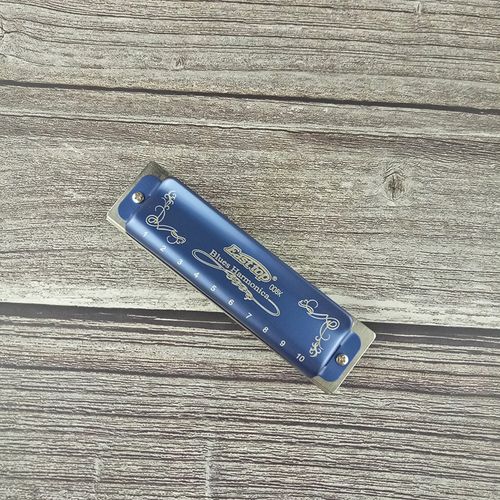
The chromatic harmonica stands out for its expressiveness, fully chromatic range, and mechanical complexity. However, achieving rapid response and pure tonal resonance requires precise management of airtightness and meticulous maintenance of the windsaver valve system.
Acoustic Physics of Air Leakage in Chromatic Harmonicas
Unlike diatonic harmonicas, chromatic models channel air through a spring-loaded slide assembly that alternates between top and bottom reedplates.
Slide Assembly Dispersion: Microscopic gaps between the mouthpiece, slide, and U-block cause primary air leakage before air reaches the reed chamber, severely dampening dynamic range and pitch stability.
Windsaver Failure Dynamics: Windsaver valves prevent air loss through the inactive reed slot. When valves degrade, warp, or become sticky from moisture, they create air leaks or produce distracting clicking noises (valve pops).
Structural Comparison of Valve Systems
Parameter
Standard Dual-Layer Mylar
Suede / Composite Valves
Valveless Configurations
Sealing Response
Immediate, highly sensitive to subtle airflow
Moderate, yielding a warmer acoustic tone
Slow, requires significantly higher breath volume
Moisture Resistance
Susceptible to condensation adhesion
High moisture tolerance, stiffens over time
Zero risk of valve sticking or mechanical noise
Dynamic Range
Maximum, ideal for fast chromatic passages
Balanced, optimized for mid-range expressiveness
Limited, noticeable efficiency loss in lower octaves
Primary Application
Classical, Jazz, and Contemporary Orchestral
Traditional Blues, Retro Jazz setups
Practice setups, high-humidity environments
Advanced Customization & Maintenance Guide
To achieve peak airflow efficiency and optimal mechanical feedback, systematic tuning of the slide and valves is required:
Slide Mechanism Optimization:
Disassemble the mouthpiece assembly and clean all oxidation from internal tracks.
Apply a precise film of high-viscosity food-grade slide lubricant along the slide track to balance smooth spring return with optimal fluid sealing.
Windsaver Anti-Stick Treatment:
Flattening & Decontamination: Clean lower membrane layers using absorbent paper. Gently reform warped valves using warm precision tweezers.
Dry-Film Barrier Application: Apply a microscopic layer of dry PTFE lubricant to the contact surface of the reed plate to prevent condensation adhesion.
Comb Precision Sanding:
Flat-sand the mating surfaces of acrylic, wooden, or aluminum combs to ensure airtight seating with the reedplates, preventing internal cross-chamber air bleeds.
Airflow Mechanics and Upper Octave Control
Soft Palate Positioning: High-octane chromatic notes require higher airflow velocity rather than brute pressure. Elevate the soft palate to constrict the vocal tract and match the resonant frequency of shorter reeds.
Thermal Pre-Conditioning: Warm the instrument to body temperature before performing to prevent rapid moisture condensation on the valves, maintaining consistent airflow dynamics.