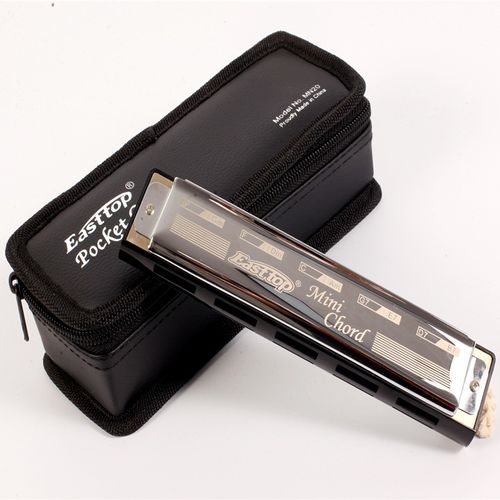
Whether you want to play soulful delta blues, classic rock, or folk melodies, the blues harmonica (also known as the 10-hole diatonic harmonica or blues harp) is one of the most expressive and portable instruments in the world.
If you are looking to buy your first instrument or start taking blues harmonica lessons, this guide covers everything you need to know about choosing the right key, understanding diatonic vs chromatic harmonica, and mastering essential techniques like blues harp bending notes.
Quick Comparison: Diatonic vs. Chromatic Harmonica
Understanding the difference between harmonica types is the first step for any beginner:
Feature
Diatonic Blues Harmonica
Chromatic Harmonica
Number of Holes
10 holes
12 to 16 holes
Music Style
Blues, Rock, Country, Folk
Jazz, Classical, Pop
Key Tuning
Single key per harp (tuning-specific)
Full 12-tone chromatic scale via slide button
Bending Capability
Designed for expressive micro-bending
Limited (designed for clean, full chromatic notes)
Why the Key of C is the Best Choice for Beginners
When searching for the best blues harmonica for beginners, expert instructors unanimously recommend starting with a diatonic harmonica in Key of C. Here is why:
Standard Lesson Key: Over 90% of beginner tutorials, sheet music, and online blues harmonica lessons use the Key of C as their default baseline.
Medium Pitch: The Key of C sits right in the middle register—neither too high (straining the ears) nor too low (requiring excessive air pressure).
Easier Note Bending: The reed length and tension on a C-harp make it the ideal learning platform to master blues harp bending notes.
How to Master Note Bending (The Soul of Blues Harp)
What is note bending? Bending is a technique where you alter your oral cavity shape and airflow angle to lower the pitch of a reed, producing that signature bluesy, crying sound.
Step 1: Get a clear single note – Practice playing hole 4 draw with relaxed lips.
Step 2: Drop your jaw and pull back your tongue – Imagine pronouncing the syllable "eee" and transitioning to "ooo" or "uuu".
Step 3: Direct the airflow to your hard palate – Focus the air pressure lower in your mouth without pushing harder with your lungs.
Key Rule for Longevity: Never force air into your harmonica. Expressive tone comes from air control and mouth shape, not heavy blowing.
Frequently Asked Questions (FAQ)
Q1: Which key of blues harmonica should I buy after C?
After mastering the Key of C, the most popular next choices are A, Cross-harp G, and D, which match standard blues jam sessions in E, D, and A respectively.
Q2: How long does it take to learn the blues harmonica?
Most beginners can play simple melodies within 1 to 2 weeks. Mastering bending and playing smooth blues riffs usually takes 2 to 3 months of consistent practice.