
News
Posted on
Architecture in Sound: Deconstructing Bach’s Goldberg Variations (BWV 988)
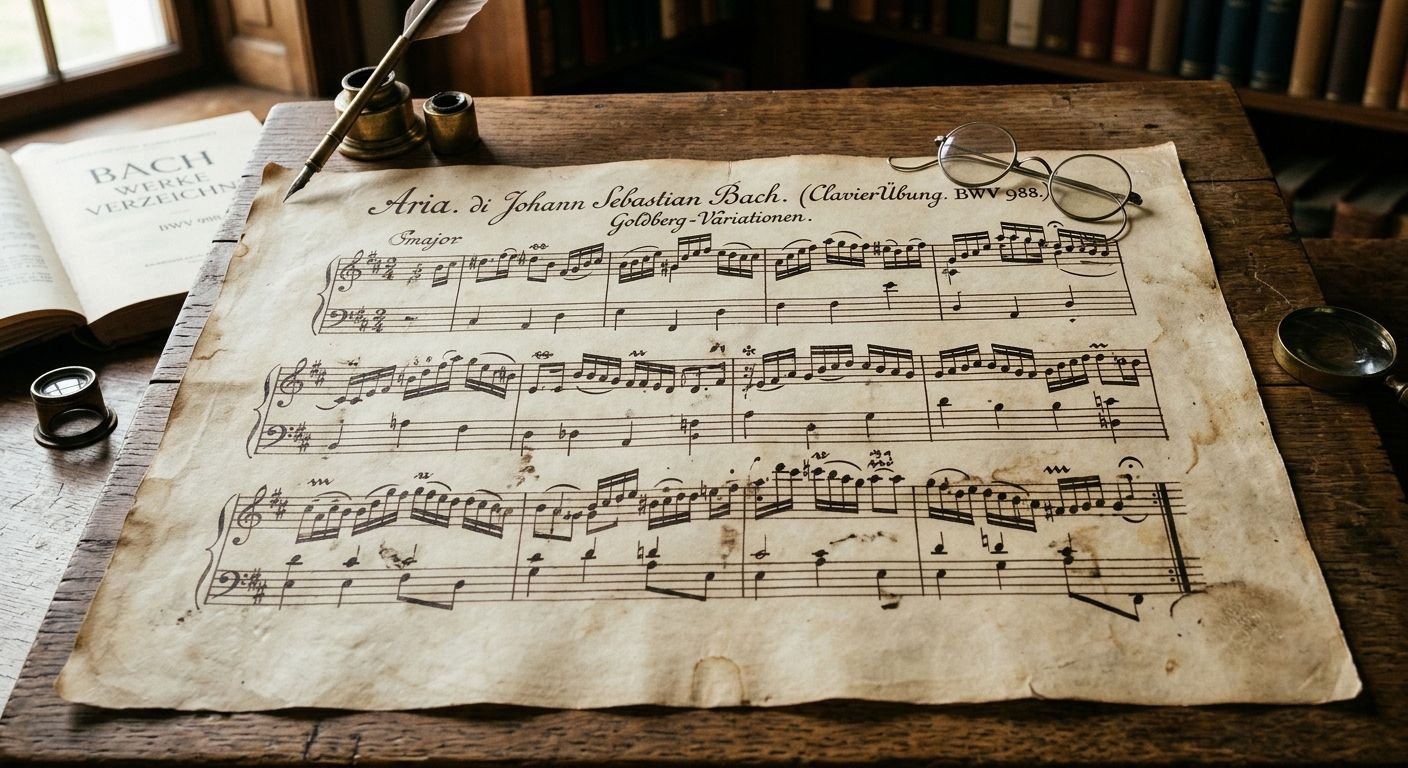
Published in 1741, Johann Sebastian Bach’s Goldberg Variations (BWV 988) stands as one of the most intellectually rigorous and architecturally complex masterpieces in Western classical music. Unlike traditional variations built upon a recognizable lead melody, the entirety of BWV 988 is anchored by a 32-measure bassline (Ground Bass) and its underlying harmonic progression. This analysis examines the work through three core dimensions: mathematical symmetry, algorithmic canon progression, and acoustic performance practices across historic recordings.1. Architectural Geometry: The Structural Grid Framed by an opening and closing Aria, the 30 intervening variations follow an uncompromising mathematical system: [Aria] ➔ [Variations 1 - 15] ➔ [Var. 16: Ouverture (Midpoint)] ➔ [Variations 17 - 30] ➔ [Aria da Capo] The Tonal Triplet (Trio Pattern) Every three variations form a self-contained structural cycle: Genre Movement: Dances, toccatas, and free-form stylizations emphasizing rhyth
Posted on
Architecture in Sound: Deconstructing Bach’s Goldberg Variations (BWV 988)
Published in 1741, Johann Sebastian Bach’s Goldberg Variations (BWV 988) stands as one of the most intellectually rigorous and architecturally complex masterpieces in Western classical music. Unlike traditional variations built upon a recognizable lead melody, the entirety of BWV 988 is anchored by a 32-measure bassline (Ground Bass) and its underlying harmonic progression. This analysis examines the work through three core dimensions: mathematical symmetry, algorithmic canon progression, and acoustic performance practices across historic recordings.1. Architectural Geometry: The Structural Grid Framed by an opening and closing Aria, the 30 intervening variations follow an uncompromising mathematical system: [Aria] ➔ [Variations 1 - 15] ➔ [Var. 16: Ouverture (Midpoint)] ➔ [Variations 17 - 30] ➔ [Aria da Capo] The Tonal Triplet (Trio Pattern) Every three variations form a self-contained structural cycle: Genre Movement: Dances, toccatas, and free-form stylizations emphasizing rhyth